

Spending countless evenings correcting stacks of papers drains your energy and significantly reduces the time available for meaningful student interaction. We analyze the most effective ai grading tools currently available to help you automate this repetitive process and efficiently reclaim your weekly schedule. This comprehensive comparison presents twelve free and paid assistants, including the only solution capable of processing handwritten submissions, to ensure you select the perfect match for your specific teaching requirements.
What you gain with ai grading assistants (and what you don't)
The real cost of manual grading: your time
You know the drill. That towering stack of papers staring at you on a Sunday night isn't just a pile of work. It represents stolen personal time, draining the energy you actually need for teaching.
We are talking about serious numbers here. Teachers lose up to 6 hours weekly on this grind. Imagine taking those hours and pouring them back into lesson prep or actually helping struggling students one-on-one.
This is where ai grading tools step in. They aren't just tech; they are a direct response to this crisis of gestion du temps.
Beyond speed: consistent feedback for every student
Let’s be honest regarding the biais et de l'inconsistance factor. Grading the thirtieth essay at midnight isn't the same as the first one at 9 AM. Fatigue sets in, and unintentionally, your strictness fluctuates based on the pile's order.
AI fixes this by locking onto your rubric. It applies the exact same criteria to every single submission. That means a correction plus équitable—fairer grading—regardless of when it’s read or who the student is.
It goes deeper than just a score. You can finally deliver feedback personnalisé that is actually actionable for the whole class, something physically impossible when you are drowning in red ink and deadlines.
The promise of AI: an assistant, not a replacement
Don't worry, the robot isn't taking your job. Think of these tools as tireless assistants. You always keep le contrôle final over the grades and the nuance of the comments before they go out.
Benefit 1: Accelerated grading process, freeing up hours each week.
Benefit 2: Reduced grading bias, ensuring fairness for all students.
Benefit 3: Ability to provide detailed, personalized feedback at scale.
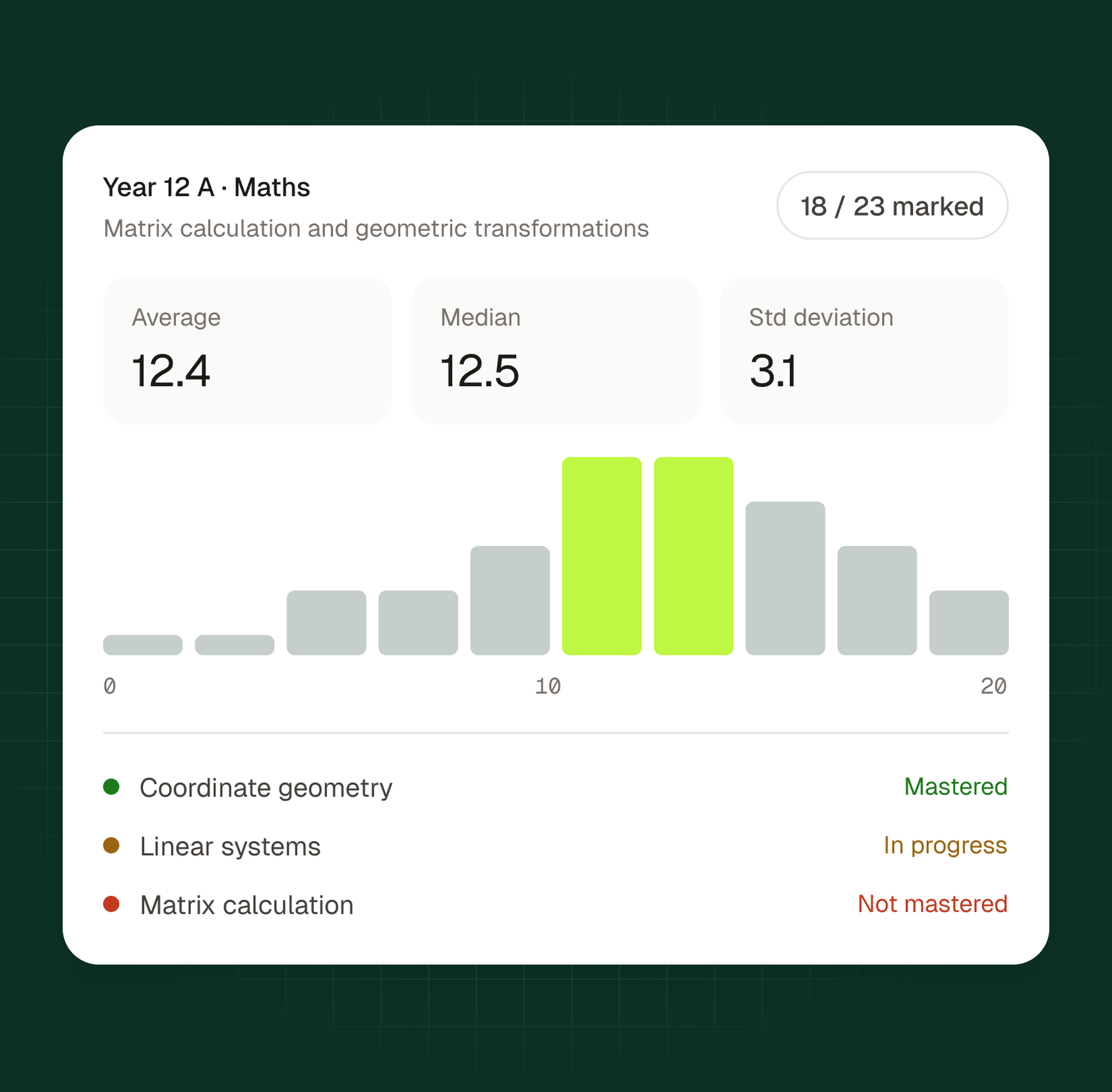
It’s about amplifying your expertise, not replacing it. It is a smart partnership. To see how this works in practice, check out this complete guide to AI exam grading.
Key Features That Separate the Good From the Great
Now that we see the value, let's look at what really matters. Not all software is equal, and specific details separate the amateur apps from the professional solutions.
Custom Rubrics: You're Still the Boss
A rubric acts as your grading blueprint. The ability to customize this grid is absolutely fundamental for your success. It ensures you maintain full pedagogical control over the entire evaluation process. AI grading tools must serve you.
Let's take a concrete example. You define the exact points for argumentation, structure, and spelling. The AI acts only as an efficient executor of these specific rules.
A tool without this flexibility is a black box. You should avoid it
LMS Integration: Does It Play Well With Your Setup?
An LMS is the digital backbone of your classroom. The most famous platforms are Google Classroom, Canvas, Moodle. Compelling tools must communicate seamlessly.
Integration prevents the exhausting nightmare of double data entry. It synchronizes student lists and grades automatically. It slides into your existing workflow without friction. This saves you hours of useless admin work.
Some tools integrate perfectly, while others function as standalone islands. This is a decisive choice.
Feedback Quality and Academic Integrity
We must go beyond the simple grade. A good tool generates constructive comments that explain errors clearly. It tells the student exactly how they can improve next time.
We must also address the issue of academic integrity. Many tools now integrate plagiarism detection or identify content generated by AI like ChatGPT. You need to verify the work is original.
The teacher must always be able to edit this feedback. You validate it before sharing.
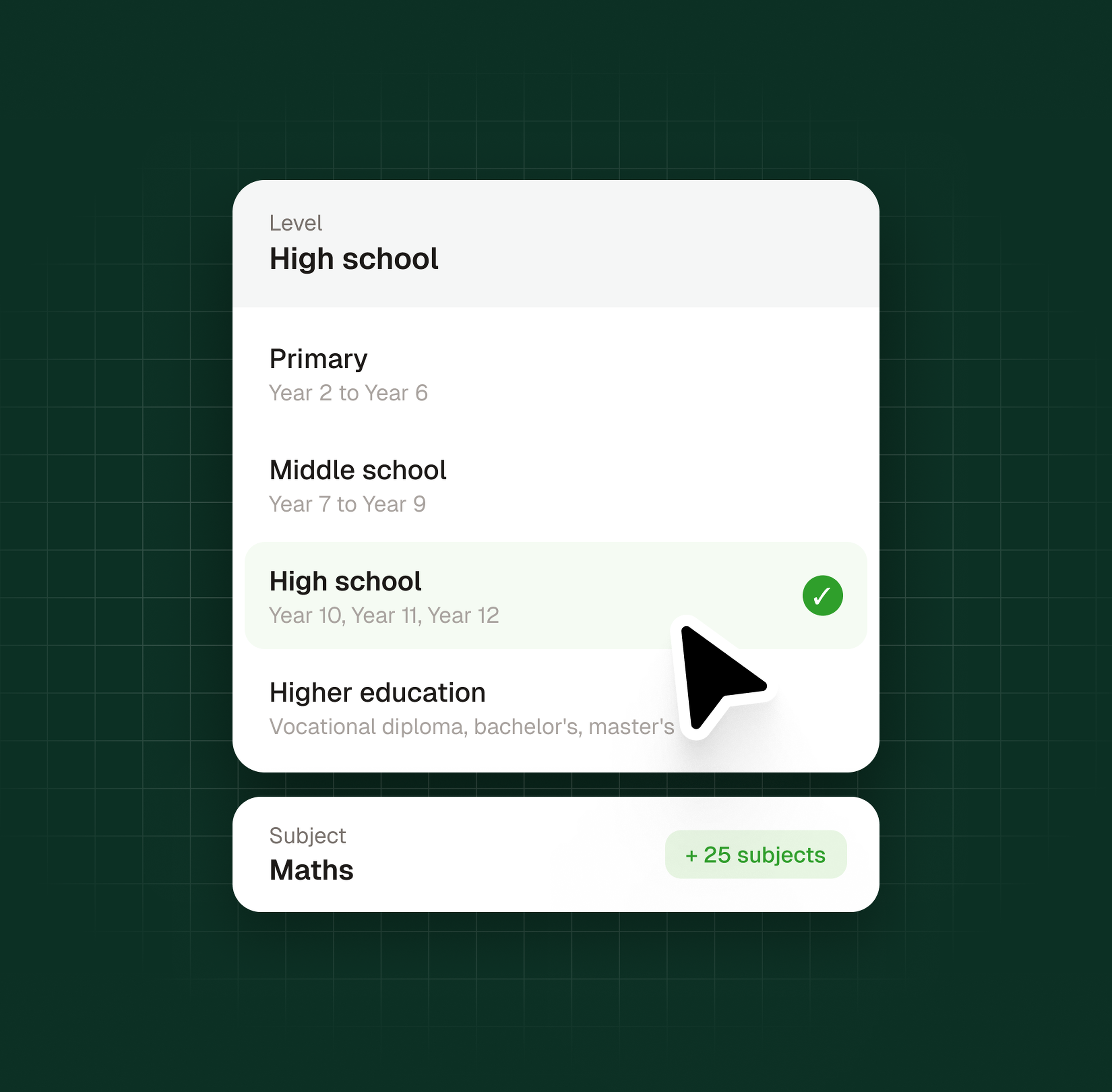
A Look at the Top AI Graders for Digital Assignments in 2025
The Dedicated Graders: Gradescope and Formative AI
Gradescope stands out as a powerful engine among ai grading tools used in higher education. It handles multiple-choice and short answers with speed, even offering handwriting recognition for uploaded PDFs. However, the reliance on scanning files can sometimes add friction to the workflow.
Then there is Formative AI, which focuses heavily on real-time feedback. Its assistant, "Luna," automates grading for specific question types instantly, creating a dynamic loop where students see mistakes immediately rather than days later.
Both are robust solutions, yet they remain primarily designed for digital environments rather than physical paper.
The Generalist Assistants: ChatGPT, MagicSchool AI, and Eduaide
ChatGPT acts as a versatile jack-of-all-trades rather than a specialist. It drafts rubrics and suggests comments, but it is not an integrated grading interface. You must also navigate GDPR compliance carefully, as standard versions do not automatically protect student data privacy.
Think of MagicSchool AI and Eduaide as Swiss Army knives for teachers. They pack dozens of tools for lesson planning and quiz generation, streamlining the prep work before you even assign grades.
Their actual grading functions are often less sophisticated than dedicated platforms. Applying practical tips for using ChatGPT to grade papers can help you bypass some of these structural limitations effectively.
The Niche Players for Specific Needs
Curipod shines when you need engagement. It builds interactive lessons filled with polls and live feedback loops, making it perfect for formative assessment rather than final summative grading.
Similarly, Diffit acts as a pedagogical assistant, not a grader. It instantly adapts reading levels for differentiation. It saves hours on resource creation, though it won't mark the papers for you.
Tools like Canva for Education or Notion AI add AI flair to organization, yet they remain peripheral to the core grading task.
The Handwritten Paper Problem: Where Most AI Tools Give Up
Why Grading Handwriting is the Final Frontier
Human handwriting is messy, chaotic, and infinitely variable. Standard OCR tools choke on scribbles, crossed-out text, or complex math diagrams. They see pixels, not logic. To truly grade, an AI must understand the student's actual reasoning, not just recognize letters.
Most ai grading tools demand clean, typed text to function effectively. Feed them a photo of a handwritten essay, and they often break. They force you to digitize everything manually first.
This remains the market's massive blind spot. Teachers are still stuck manually grading huge paper stacks.
Examino: The Specialist for Handwritten Assessments
This is where Examino steps in. It wasn't built for digital quizzes; it was engineered specifically to tackle the chaos of physical paper. It solves the problem others ignore.
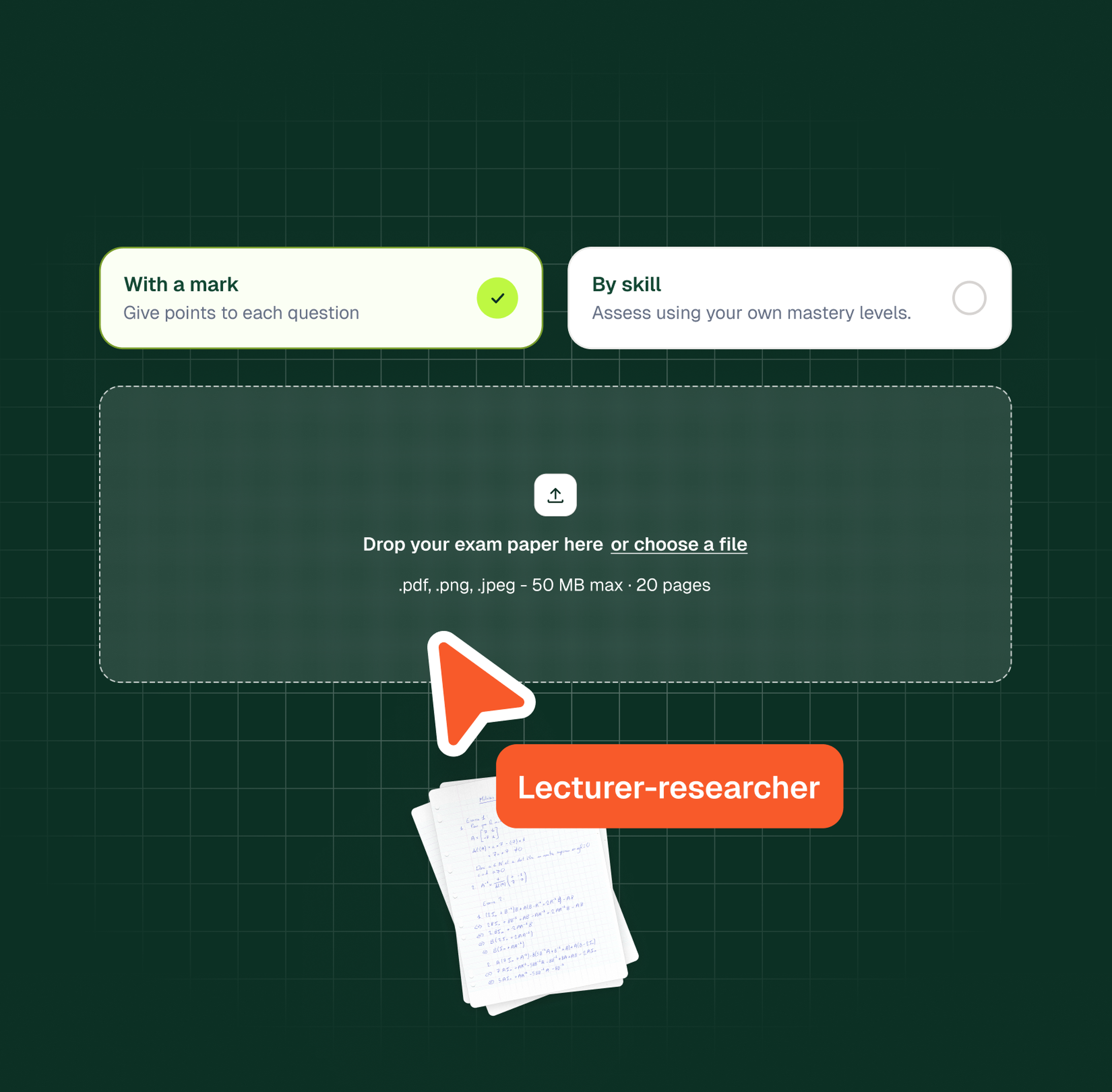
It stands alone as the solution capable of grading handwritten copies directly from a scan. Whether it's a complex math proof — graded by our specialized AI Math Grader — a sketched schema, or a long essay, the system interprets it accurately. No typing is required.
Think of it as a specialized AI essay grader that finally bridges the gap between analog exams and digital speed.
Try Examino for free
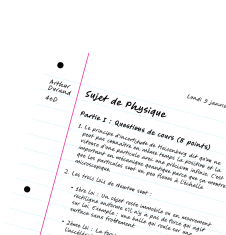
The app lets you scan your handwritten papers using your smartphone to grade them with Artificial Intelligence.
Maximize your teaching impact by minimizing your grading workload.
From Phone Scan to Graded Paper: How It Works
The workflow is refreshingly simple: you scan copies using your smartphone. Upload your specific grading rubric, and the AI performs that heavy first correction pass instantly, saving hours.
Unlike Gradescope, which often relies on grouping answers or basic OCR on PDFs, Examino analyzes the full handwritten context. It reads the logic, not just the characters. It handles the messiness of real student work.
You always validate the AI's work, ensuring the final grade is fair, accurate, and personalized. You stay in control.
The 2025 Showdown: A Complete Comparison of the 12 Best AI Grading Tools
Let's lay it all out. To help you see clearly, here is a face-to-face of the 12 best options available in 2025.
The Ultimate Cheat Sheet: Price vs. Features vs. Format
You don't have time to test a dozen apps, so I’ve done the heavy lifting for you. Below is the raw data you need to stop guessing and start grading faster—no fluff, just the specs.
Examino: Free trial (10 copies/mo), Paid plans. Point Fort: The only tool for native handwritten grading. Support Manuscrit: Yes.
Gradescope: Limited free plan, then paid. Point Fort: Robust for higher ed, handles code & PDFs. Support Manuscrit: Yes (via PDF/scan OCR).
Formative AI: Free basic, Premium from ~16€/mo. Point Fort: Real-time feedback and student tracking. Support Manuscrit: No.
ChatGPT: Free version, Plus from ~19€/mo. Point Fort: Versatile idea generator. Support Manuscrit: No.
MagicSchool AI: Limited free, Plus for ~95€/yr. Point Fort: Huge library of teacher tools. Support Manuscrit: No.
Eduaide: Strict free limits, paid plans. Point Fort: All-in-one planning workspace. Support Manuscrit: No.
Curipod: Limited free version. Point Fort: Interactive lesson creation. Support Manuscrit: No.
Diffit: Free. Point Fort: Instantly adapts reading levels. Support Manuscrit: No.
Canva for Education: Free for teachers. Point Fort: Visual design with AI features. Support Manuscrit: No.
Autoppt: Freemium model. Point Fort: Quick presentation generation. Support Manuscrit: No.
SlidesAI: Freemium model. Point Fort: Creates presentations in Google Slides. Support Manuscrit: No.
Notion AI: Paid add-on. Point Fort: AI assistant inside Notion workspace. Support Manuscrit: No.
So, Which One Should You Choose?
If your principal problem is the correction de copies manuscrites, the choice is simple: Examino is the only tool specialized for this. It handles physical papers natively, saving you hours of manual deciphering that other tools simply cannot touch.
However, if you work exclusively with digital assignments and need deep LMS integrations, Gradescope or Formative AI are solid competitors. For more general assistance with lesson planning or rubrics, the other ai grading tools on this list can be useful additions to your workflow.
I invite you to compare the offers carefully. You can check the pricing plans of Examino to see how they are designed for both individual teachers and institutions.
Selecting the right AI assistant depends on your specific teaching needs. For digital workflows, generalist tools offer solid support. However, for authentic handwritten assessments, Examino stands as the dedicated solution. We empower you to grade faster without compromising quality. Explore our plans today to reclaim your valuable time.