
Moving Beyond the Red Pen: How AI Delivers Feedback That Matters
You are likely watching potential vanish every time a paper is returned with nothing but a number on it. Traditional grading acts as an autopsy rather than a diagnosis, telling a student they failed without explaining how to survive next time. Artificial intelligence flips this script entirely, moving us away from judgment and toward actionable guidance.
The Limits of a Simple Grade
A "C-minus" offers zero roadmap for actual improvement. It acts as a final judgment rather than a useful diagnostic tool. Students see the result, yet the root cause of their error remains hidden.
This silence creates anxiety and kills student motivation quickly. Learners obsess over the number, ignoring the actual material needed to grow.
True progress requires constructive feedback, but crafting detailed notes for every pupil is exhausting. Teachers simply lack the hours to do this manually. Consequently, a massive "feedback gap" widens between potential and reality.
The main drawbacks of number-only grades:
They lack specific context.
They don't offer actionable steps for improvement.
They can foster a fixed mindset focused on scores, not growth.
AI as a Source for Detailed Commentary
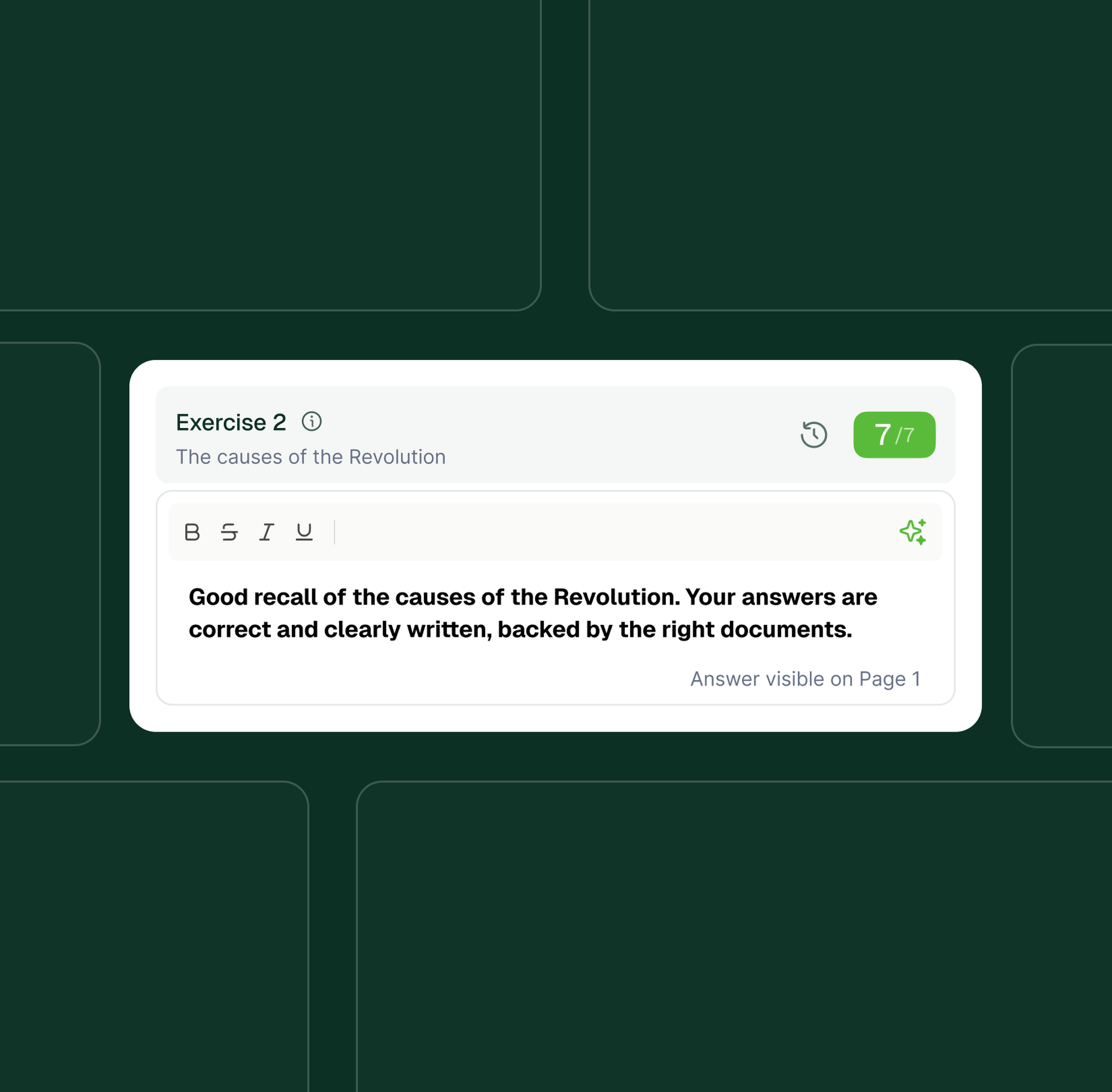
Artificial intelligence shatters this old bottleneck completely. Tools now analyze assignments to generate personalized comments for every single exercise. They adhere strictly to the pedagogical criteria set by the educator. This happens in seconds, not weekends.
The goal isn't just to mark an answer wrong. The system explains the specific error and suggests concrete paths for remediation.
We can finally offer ai feedback students actually use for deep understanding. Solutions like Examino make this instant, detailed critique possible at scale. It transforms evaluation into a conversation.
Personalization at Scale: The Mechanics of AI Feedback
But how does this technology actually generate feedback that is both relevant and aligned with pedagogical goals? It's all about putting the teacher in control.
The Central Role of Grading Rubrics
Many educators worry that automation means losing oversight. However, effective ai feedback for students relies entirely on your specific instructions. The AI does not invent grading standards; it strictly applies the custom evaluation criteria you upload, acting as an extension of your expertise.
You define the exercise objectives and specific skills to assess. The system uses this exact grid to structure its analysis, ensuring no requirement is overlooked.
This guarantees that every comment generated is perfectly aligned with your course objectives and your personal expectations for the assignment.
From Analysis to Actionable Advice
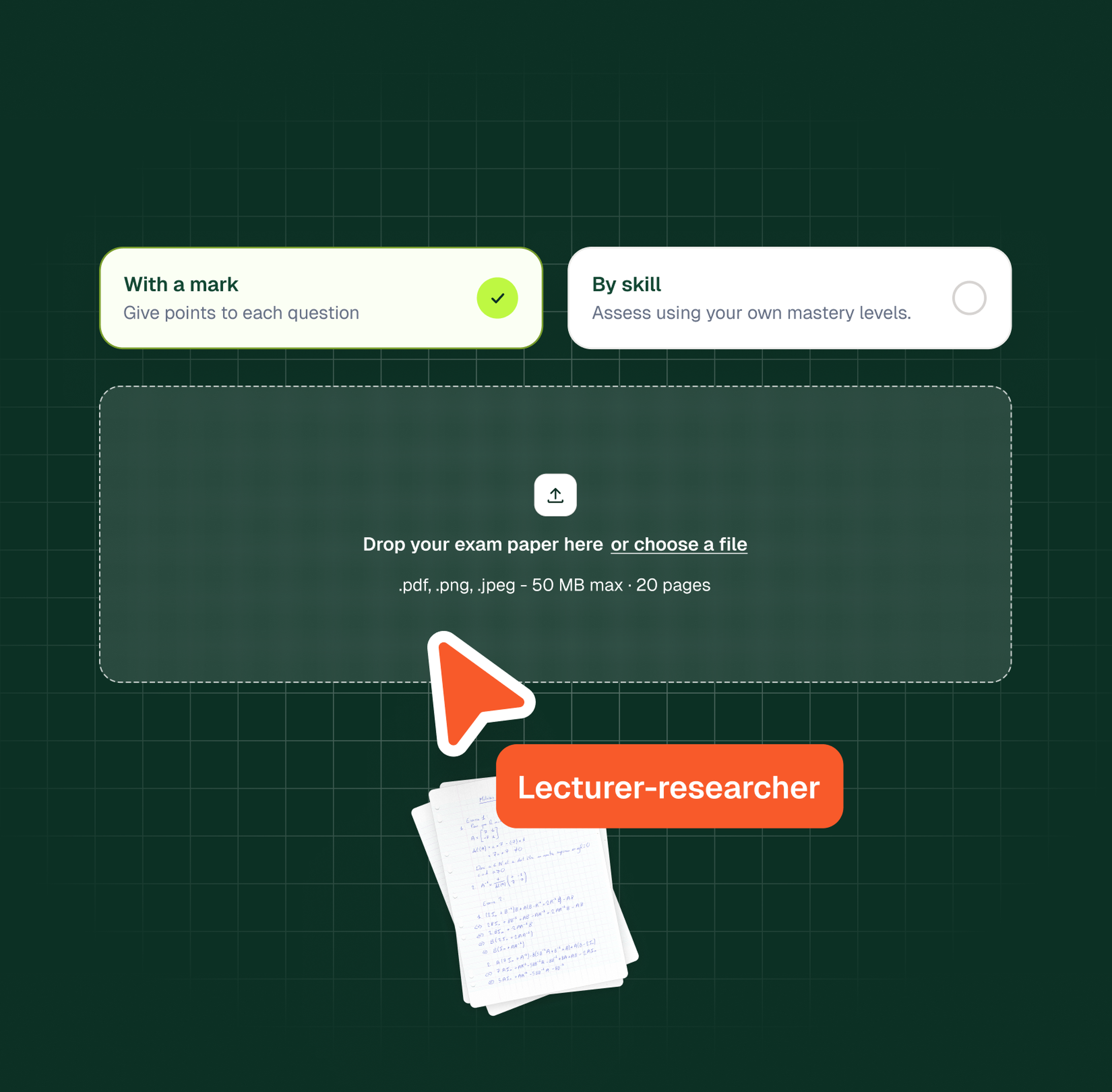
The process is rigorous. Solutions like Examino analyze the student's paper—including handwriting—compare it against your rubric, and instantly identify where the work meets or misses the mark.
The system then generates concrete suggestions. Instead of just noting "weak argument," it might say, "Add a concrete example here to support your claim." This specific guidance fosters a deeper understanding rather than a fixation on the grade.
This precision transforms basic correction into a powerful learning engine. See how this works in Modern AI exam grading.
The Impact on Student Learning and Motivation
Providing such detailed feedback is one thing, but the real question is what effect it has on the students themselves.
Building a Growth Mindset
Constant, constructive input helps students view mistakes differently. They stop seeing errors as final failures. Instead, every correction becomes a tangible opportunity to learn.
This shift encourages a true growth mindset. We value effort and strategy over natural talent alone.
Students become noticeably more resilient in their work. They are willing to rework assignments because they have a clear roadmap. We see them strive to improve rather than give up.
Boosting Engagement and Confidence
Immediate, personalized ai feedback students receive keeps them fully engaged. They do not wait days to understand their specific mistakes. This speed makes the learning process dynamic. Tools like Examino ensure no time is lost.
The neutral tone of AI is often less intimidating. It feels like guidance rather than direct judgment.
Seeing concrete progress guided by clear comments strengthens self-confidence. Students develop genuine intrinsic motivation. They finally understand that they can master the material with practice.
It reduces the fear of failure by focusing on improvement.
It provides clear, actionable next steps for revision.
It helps build confidence by highlighting both strengths and areas for growth.
Practical Application and the Teacher's New Role
Beyond Text: Feedback on All Types of Work
Many educators assume automated analysis stops at typed essays. That is a misconception. Advanced algorithms now interpret a vast array of supports, bridging the gap between physical worksheets and digital insights. This evolution ensures the ai feedback students receive covers every format.
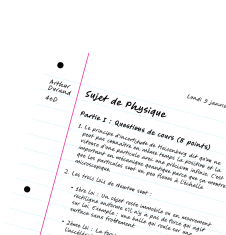
Consider the challenge of handwritten assignments. With tools like Examino, we allow teachers to digitize paper copies instantly. Our system deciphers unique handwriting to provide the same depth of constructive critique as a typed document, solving a massive logistical headache.
The Teacher as the Ultimate Guide
Let's be clear: AI is the assistant, never the replacement. The educator's role shifts from a correction machine to a pedagogical supervisor. You become a mentor, guiding the learning process rather than just marking errors.
However, you must validate every suggestion. Algorithms can hallucinate or show bias, so your human judgment remains the final firewall to ensure relevance and accuracy.
By drastically reducing the repetitive teacher workload, we free up hours previously lost to grading. This time is better spent on high-value tasks like individual coaching and crafting engaging lessons that truly resonate.
Key considerations for educators: Always review AI-generated feedback before sharing.
Be aware of potential AI biases or "hallucinations".
Ensure student data privacy and security.
AI-driven feedback redefines assessment, shifting from simple scores to actionable insights. By streamlining the grading process, we empower educators to focus on personalized guidance. This approach not only saves time but also cultivates a growth mindset, turning every assignment into a valuable opportunity for student development.