

Math, French, Biology, Code: one grader for every subject you teach.
The AI Math Grader
that reads the work, not just the answer
Upload your students' math papers, handwritten or typed, along with your rubric. Examino reads each student's work line by line and awards partial credit step by step, following that rubric. Algebra, calculus, geometry, statistics, and every other subject you teach. You review the feedback, edit any grade and approve the set before anything is exported.
Student's handwritten work
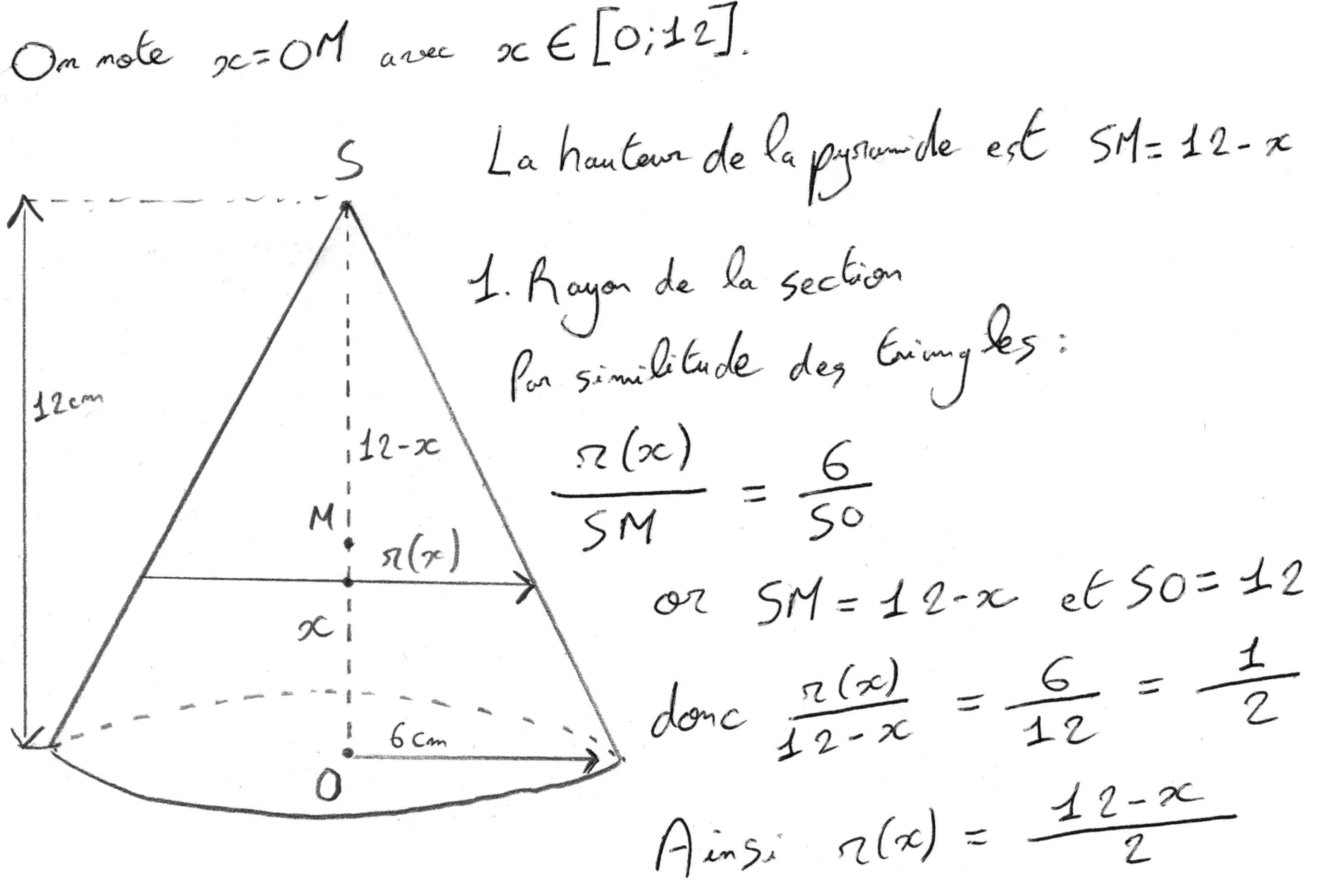
Feedback generated by Examino
Calculation of the radius
Excellent work! Rigorous reasoning and a perfectly structured approach. You correctly used similar triangles to determine the radius .
One small correction: you mention "the height of the pyramid", but this solid is a right circular cone. It's a minor detail, but in geometry, telling apart solids with a polygonal base and those with a circular base matters for the rest of the unit.
Partial credit, step by step, from your rubric
You're going to love grading. We know, it sounds weird to read.

Reads any handwriting
even messy student algebra
Trained OCR for handwritten equations, fractions, square roots and matrix notation. Whether your students wrote it on lined paper, graph paper or a torn-out sheet, Examino reads it.

Partial credit
from your rubric, step by step
Upload your rubric with the points for each step. Examino follows the student's reasoning and shows you why it awarded or withheld each point, so you can approve, edit or override the score in one click.

Richer feedback than
any red-pen comment
Each student gets a personalized breakdown: which concept they missed, where the calculation slipped, and auto-generated remediation exercises to close the gap.
From a stack of math papers to graded tests in 3 steps
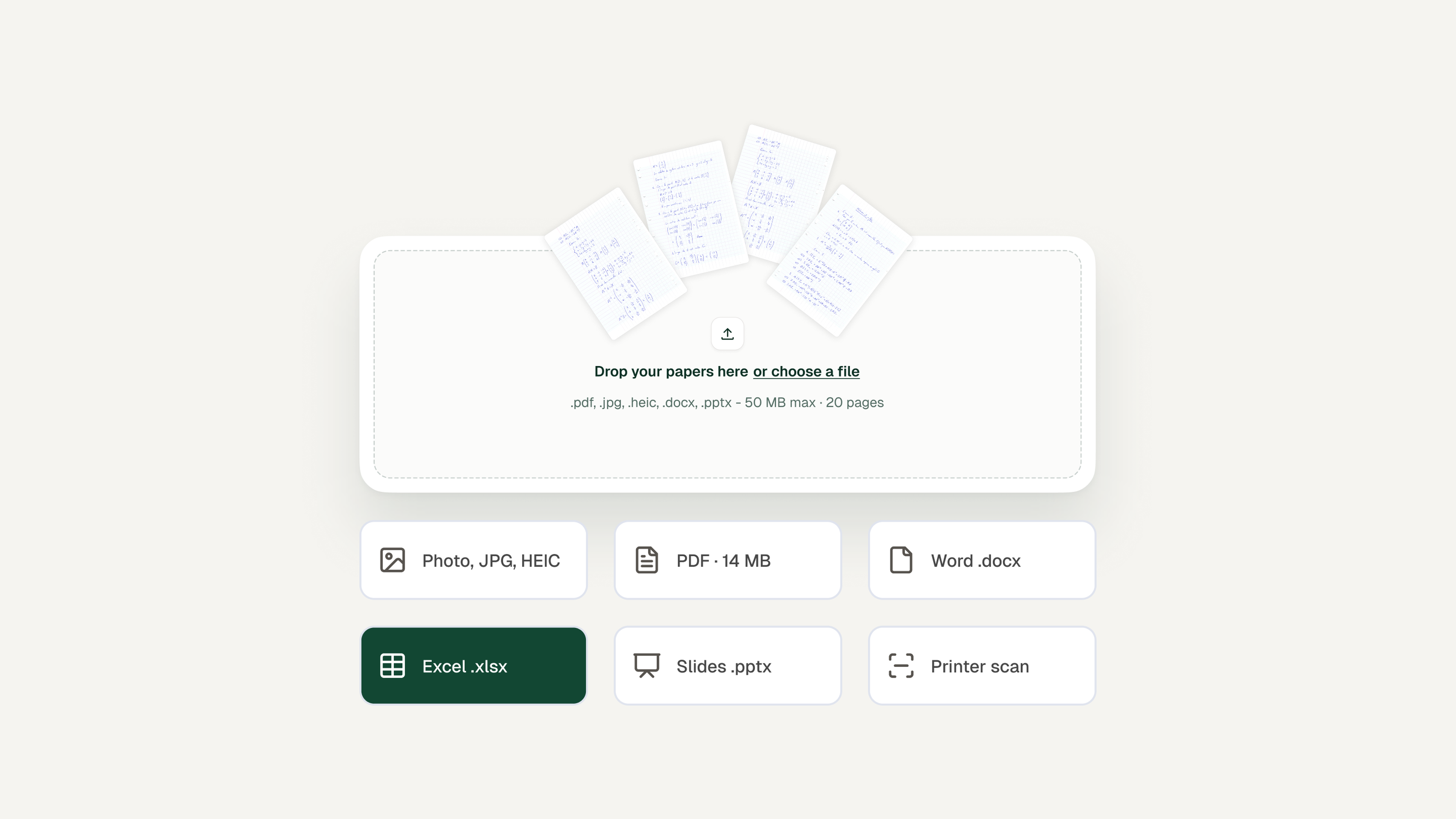
Upload or scan.
Drop a PDF, photos, or have students scan their paper directly with their phone: no app to install, just a QR code and the native camera. Works for printed or handwritten math.
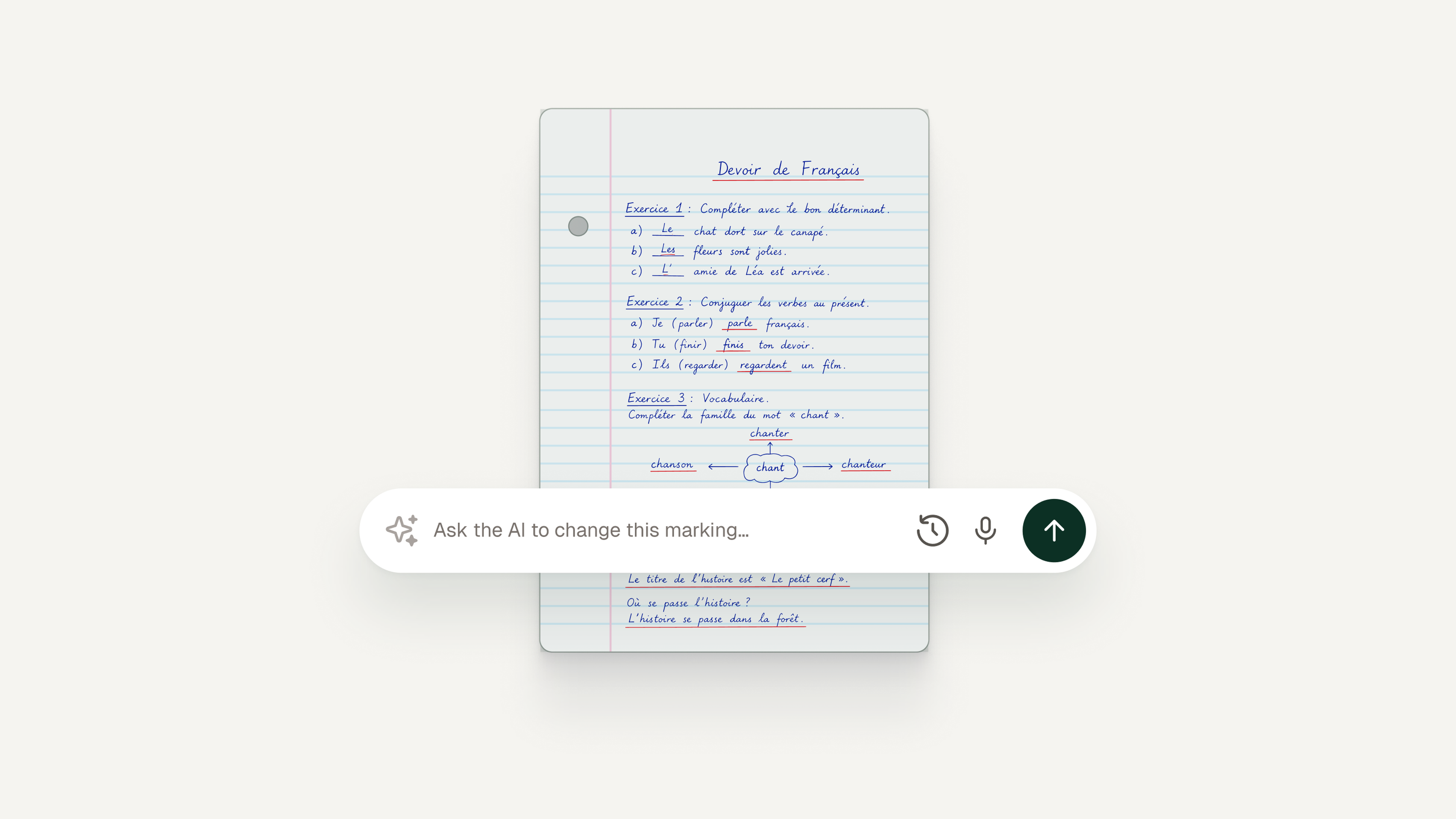
AI grades against your rubric.
Upload your rubric and answer key (or let Examino draft one for you to edit), with the points for each step. Examino reads each student's work and awards partial credit step by step, following your rubric, with a justification you can check against the work.
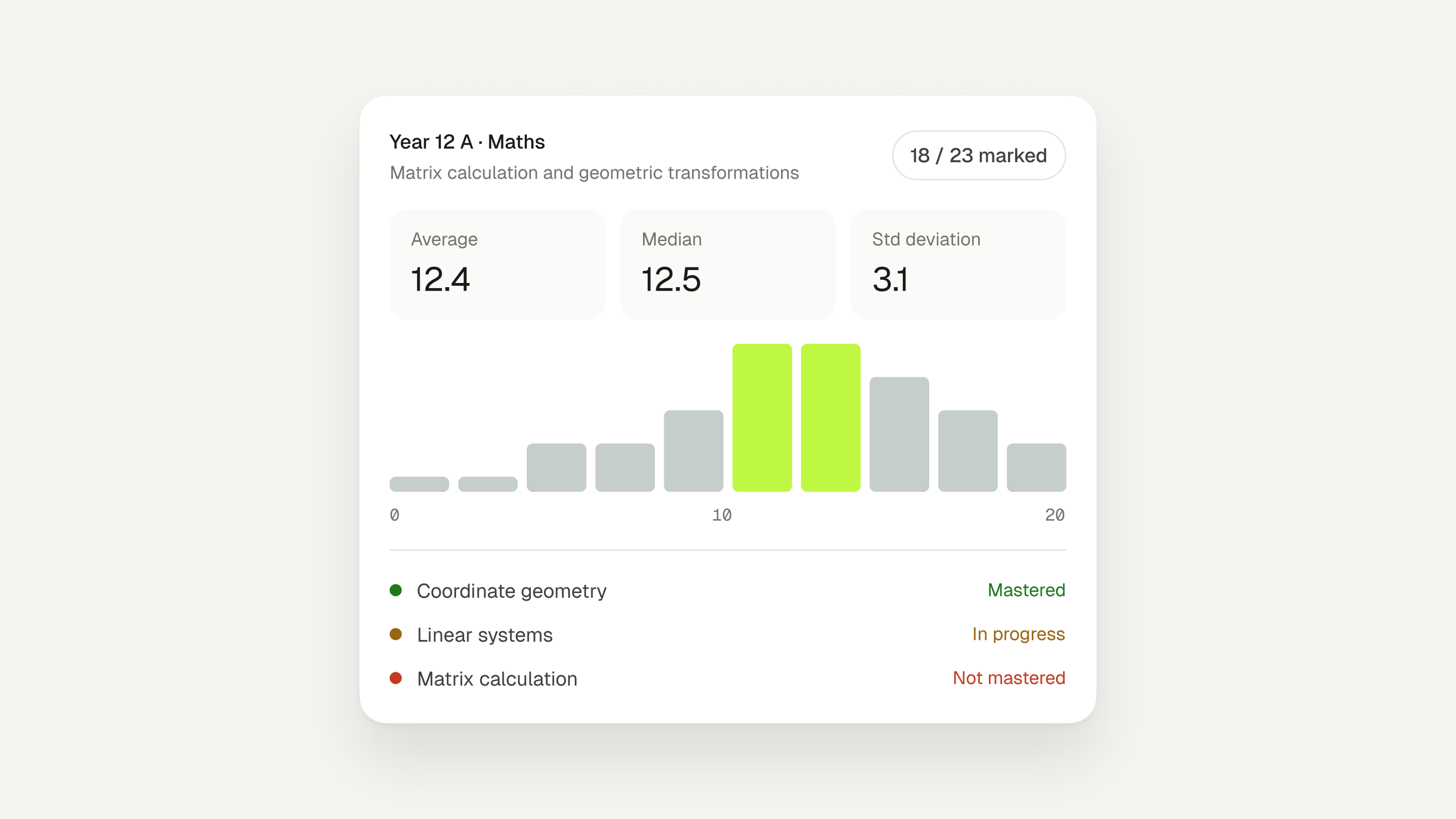
Review, export, hand back.
Review and edit grades in your dashboard, then approve the set. Export annotated PDFs and Word files (LTI 1.3 available for your LMS), including the personalized remediation worksheet built from each student's mistakes.
Already used by 30,000+ educators
From middle school algebra to graduate-level calculus, Examino grades the math the way teachers actually grade it.
I can no longer do without Examino. The final output is much more detailed than what I could produce myself. I don't have to struggle with illegible handwriting anymore.
I had to readjust 1 grade out of 34, lowering it by 10%. That's truly excellent performance; I agreed with everything else.
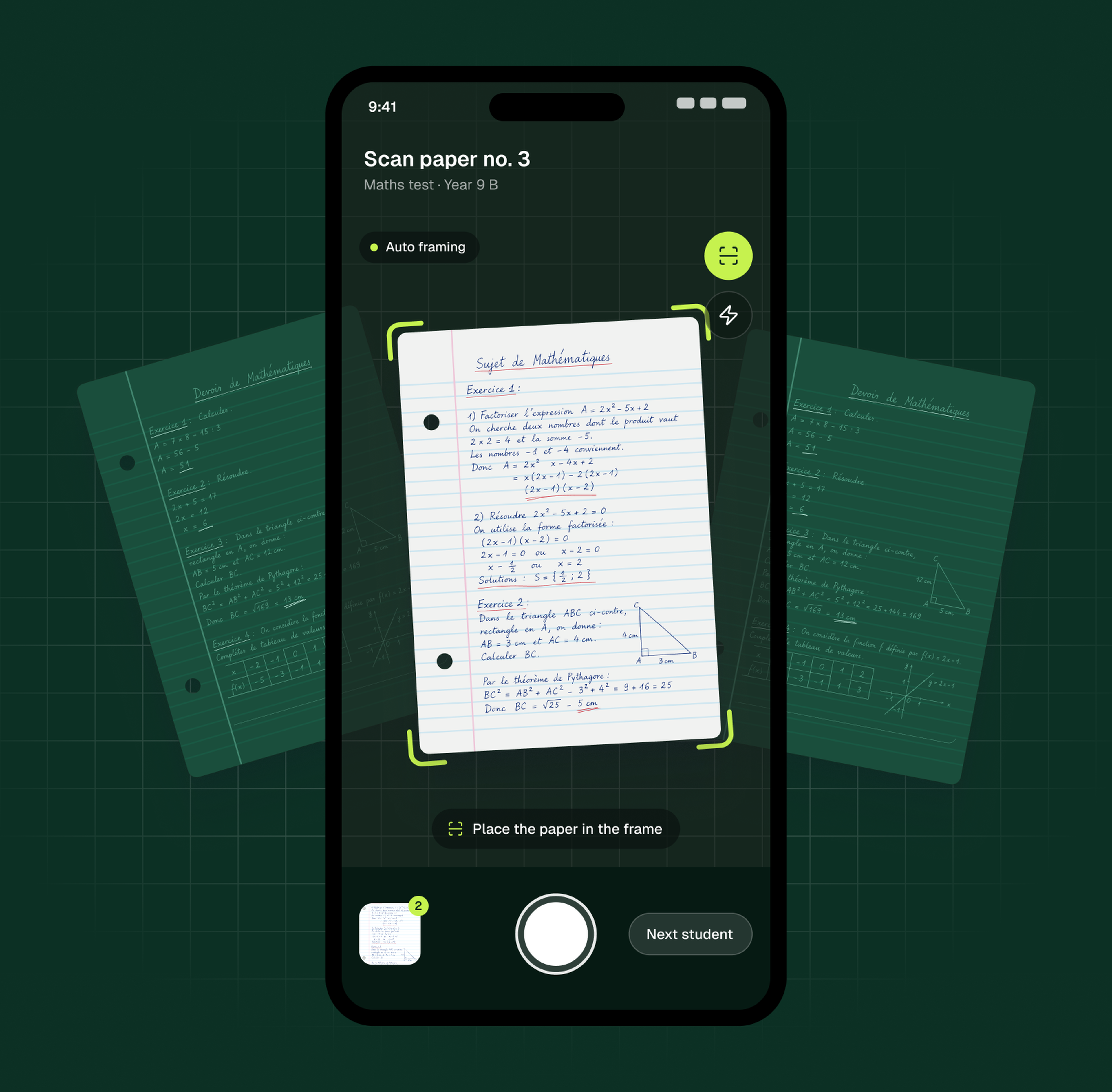
Import your papers
Import any math paper: printed, handwritten or scanned
Upload PDF, JPG, PNG, or have students self-scan via QR code. Examino reads handwritten equations, fractions, exponents, geometric diagrams, and even messy worked solutions. Works on smartphones, tablets and document scanners: no app required for students.
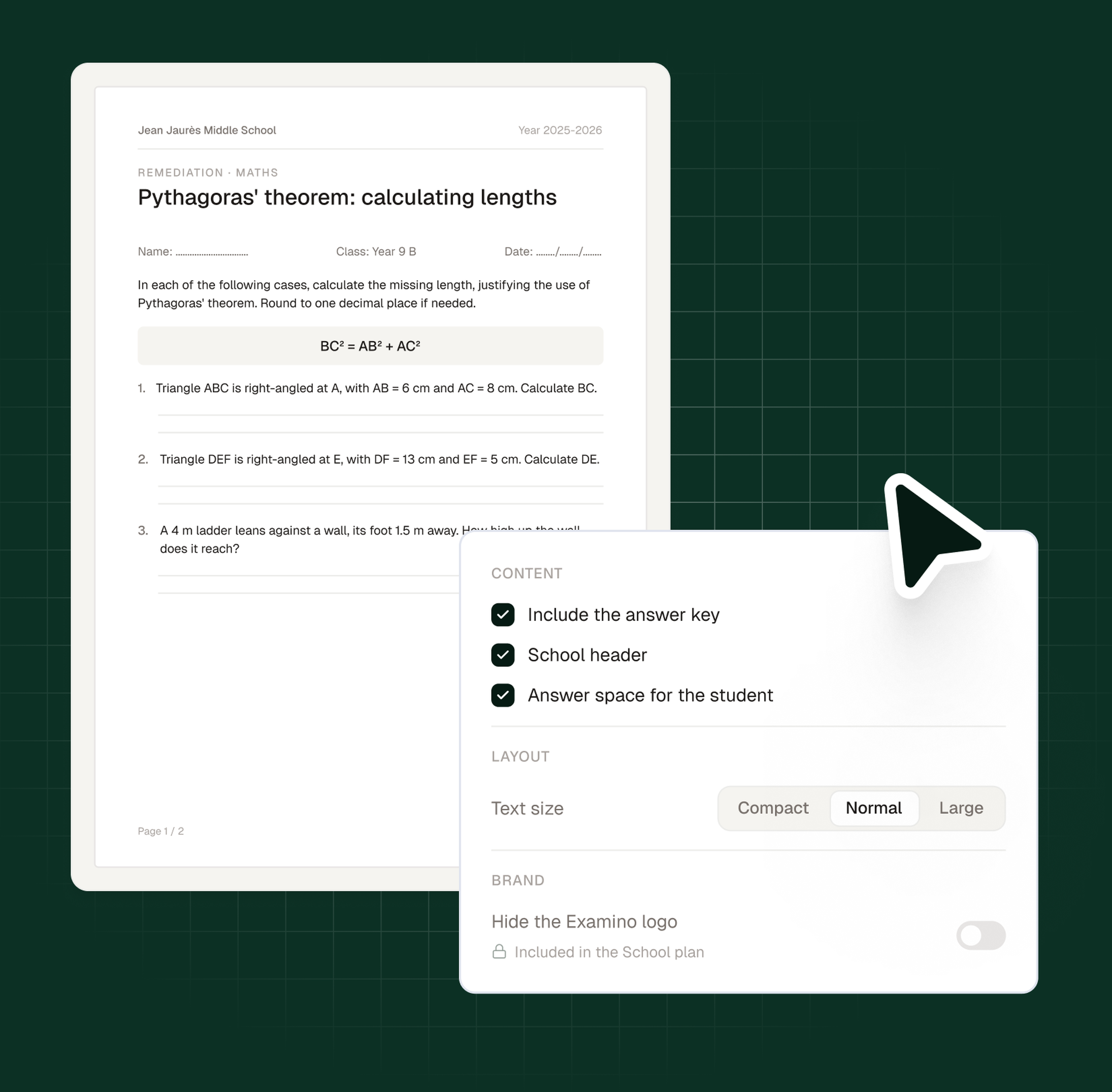
Export your grades
Export grades, annotations
and reports
Download annotated PDFs (with your school's logo), Word files, CSV grade summaries or per-student reports. Connect your LMS through LTI 1.3 or hand back results in one click: students get their score, the reasoning behind each point, and the steps they got wrong.
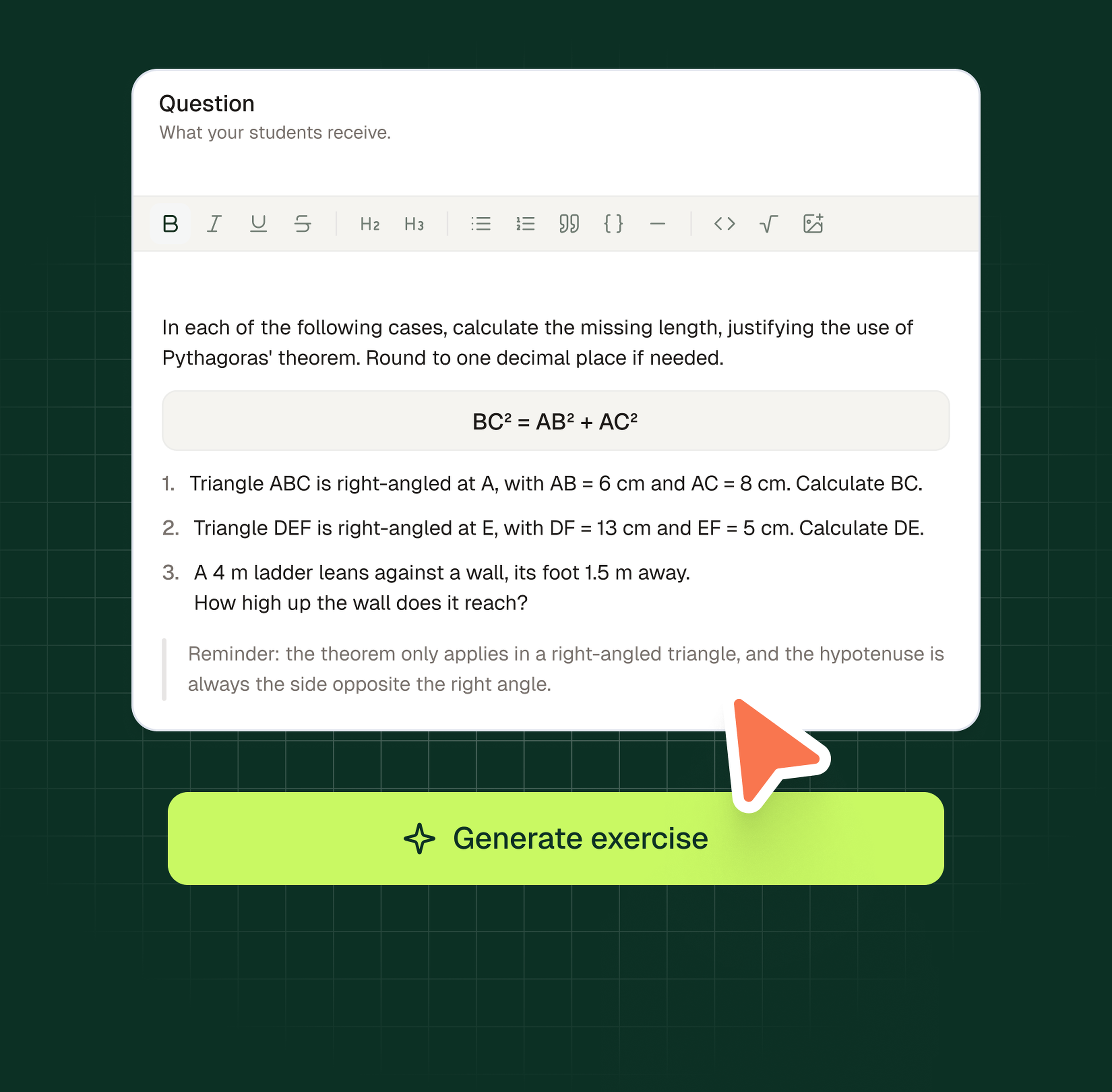
Generate personalized exercises
Auto-generate remediation worksheets
After grading, Examino identifies each student's weak spots (quadratic factoring, derivative chain rule, vector dot products) and generates targeted practice exercises. Hand them out for homework or use them in your next class. Built into the grader, not a separate tool.
Simple, fair pricing. Cancel anytime.
10 free papers every month. Cancel or change your plan at any time.
Discovery
For teachers who want to try Examino: 10 free papers a month.
Free
Grade up to 10 papers / month
1 rubric edit per assignment
Unlimited targeted practice exercises
Chat customer support
Class overview dashboard
Export feedback to Word and PDF
Standard
Designed for individual teachers with regular grading needs.
$7.50
/ month No annual commitment
Grade up to 100 papers / month
3 rubric edits per assignment
Unlimited targeted practice exercises
Chat customer support
Class overview dashboard
Export feedback to Word and PDF
Cancel anytime
Plus
For teachers with intensive grading needs.
$17.90
/ month No annual commitment
Grade up to 300 papers / month
3 rubric edits per assignment
Unlimited targeted practice exercises
Chat customer support
Class overview dashboard
Export feedback to Word and PDF, without the Examino logo
Cancel anytime
Schools and districts
Designed for schools, districts, and higher education institutions.
Advanced analytics, premium support, and an admin workspace to manage licenses. Contact us for pricing.
AI math grading: your questions, answered
Please feel free to contact us via email at contact@examino.ai
Your first 10 math papers, graded for free.
No setup call. Upload a math test and see your dashboard fill up in under 2 minutes.
Our Blog
Learn more
 Artificial IntelligenceAI Essay Grading: The Complete Teacher's Guide
The integration of artificial intelligence (AI) in education has transformed traditional assessment methods. This guide aims to provide educators with a comprehensive overview of AI essay grading, its implications, benefits, and potential challenges, equipping teachers with the knowledge to adapt to this new landscape.
 December 31, 2024
 Artificial IntelligenceHow to scan and grade handwritten assignments with AI
Deciphering messy handwriting and scoring tall stacks of papers by hand is one of the slowest parts of teaching. AI tools can now read handwritten assignments and draft a first pass of grades and feedback for you to review.
This guide covers how to scan paper assignments, how to set up Examino with your rubric, and how to review the AI's draft grades and comments before anything goes back to students.
 December 17, 2025
 Artificial IntelligenceBest AI grading tools for teachers: 13 tools compared
The bottom line: many AI grading tools work best on typed assignments, and fewer of them grade handwritten work.
Specialized tools such as Examino grade handwritten papers from a phone scan against your rubric, and you review and validate every grade before export.
December 16, 2025